
Best Solar Panel Cleaning Tools and Equipment: What the Pros Use in South Florida


Your solar panels are one of the best investments you can make for your home in South Florida. But keeping them clean and performing at their best requires the right approach - and the right solar panel cleaning tools. Using the wrong equipment can scratch your panels, void your warranty, or even put your safety at risk.
At Blue Energy Electric, we've cleaned and maintained solar energy systems across Palm Beach, Martin, St. Lucie, and Indian River Counties since 2012. With over 2 million watts installed and serviced throughout South Florida, we know exactly what it takes to keep panels producing at peak efficiency in our unique climate.
In this guide, we'll walk you through the professional-grade solar panel cleaning equipment our licensed solar professionals use every day - and explain why the right tools make all the difference between a safe, effective cleaning and a costly mistake.
Why the Right Solar Panel Cleaning Supplies Matter
Solar panels may look tough, but their surfaces are more delicate than most homeowners realize. The glass on your panels is coated with a thin anti-reflective layer that maximizes sunlight absorption. Scratching or damaging that coating - even slightly - reduces your system's energy output permanently.
That's why choosing the correct solar panel cleaning supplies isn't just about getting panels looking spotless. It's about protecting your investment, maintaining your manufacturer warranty, and ensuring your system keeps saving you money for decades to come.
Here in South Florida, the stakes are even higher. Salt air from the coast, heavy pollen seasons, construction dust, humidity, and frequent rain all create a unique combination of grime that clings to panel surfaces. Standard household cleaning tools simply aren't designed for this job.
Deionized Water Systems: The Foundation of Professional Cleaning
If there's one piece of solar panel cleaning equipment that separates professional cleaning from a DIY rinse, it's a deionized (DI) water system.
What Is Deionized Water?
Deionized water has had all dissolved minerals removed through a specialized filtration process. Regular tap water in South Florida contains calcium, magnesium, and other minerals that leave behind white, chalky residue when they dry on your panels. Those mineral deposits create a film that blocks sunlight and reduces energy production over time.
Why Pros Rely on DI Water
Professional-grade DI water systems typically include a multi-stage filtration unit with replaceable resin cartridges that strip minerals from the water before it reaches your panels. The result is a spot-free rinse that leaves zero residue - keeping your panels cleaner for longer after each service.
At Blue Energy Electric, deionized water is the backbone of every cleaning we perform. It's especially critical for coastal properties in Jupiter, Singer Island, and Stuart, where salt buildup combines with hard water minerals to create stubborn deposits that regular water simply can't remove effectively.
Soft-Bristle Brushes: Gentle Cleaning Without the Damage

The solar panel cleaning brush is arguably the most important hand tool in a professional's arsenal. But not just any brush will do.
What Makes a Solar-Safe Brush?
Professional solar panel cleaning brushes are specifically engineered with ultra-soft bristles - typically made from nylon, polyester, or microfiber materials. These bristles are soft enough to lift dirt, bird droppings, and organic buildup without scratching the panel glass or damaging the anti-reflective coating.
Features to Look For
Non-abrasive bristle material - Never use brushes with stiff, natural-fiber, or wire bristles on solar panels
Wide brush head - A 12- to 24-inch wide head covers more surface area, reducing cleaning time and the number of passes needed
Water-fed capability - Many professional-grade brushes connect directly to a DI water line, allowing simultaneous scrubbing and rinsing
Rotating brush heads - Some advanced solar panel cleaning tools feature motorized rotating heads that provide consistent, even pressure across the panel surface
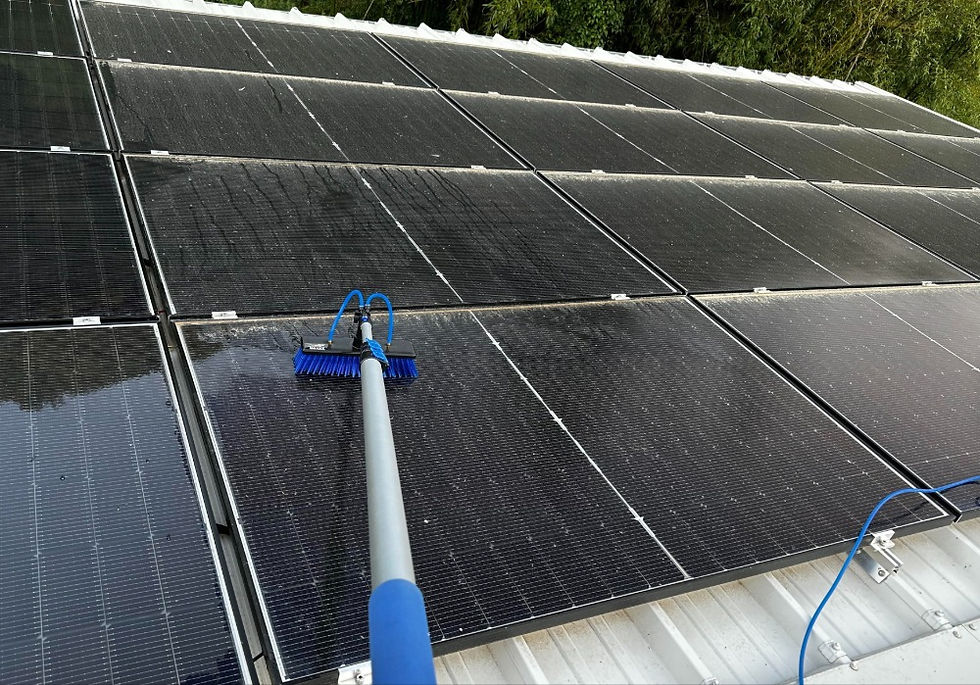
Our team at Blue Energy Electric uses water-fed soft-bristle brushes that deliver a gentle yet thorough clean on every panel type we service, including Q CELLS, REC, and other brands installed across South Florida. This method is manufacturer-approved and fully compliant with warranty requirements.
Telescoping Extension Poles: Reaching Panels Safely

Most residential solar arrays in Palm Beach, Martin, St. Lucie, and Indian River Counties are installed on rooftops - often on two-story homes with steep-pitched roofs. Reaching those panels safely requires professional-grade extension poles.
How Extension Poles Work
Telescoping poles extend anywhere from 12 to 30 feet or more, allowing technicians to clean panels from the ground or from a safe rooftop position without leaning over edges or working in awkward, dangerous positions. Most professional poles are made from lightweight carbon fiber or aluminum, making them easy to handle even at full extension.
Why Extension Poles Are Essential
Extension poles are a key part of any solar panel cleaning kit because they reduce the need to walk directly on or near panels. Walking on solar panels can crack cells, damage mounting hardware, and create micro-fractures that degrade performance over time - even if the damage isn't visible to the naked eye.
For our team, extension poles paired with water-fed brushes are the standard setup for residential and commercial cleaning throughout South Florida.
Squeegees and Drying Tools: A Streak-Free Finish
After scrubbing and rinsing, professional-grade squeegees give panels that final streak-free finish. While deionized water minimizes spotting on its own, a high-quality squeegee removes any remaining water and loosened debris, leaving panels crystal clear.
What the Pros Use
Silicone-blade squeegees - Softer than rubber, silicone blades glide across panel glass without leaving marks or micro-scratches
Squeegee attachments for extension poles - Allow technicians to dry panels from a safe distance, just like the brushes
Lint-free microfiber cloths - For detail work around panel edges, frames, and junction boxes where squeegees can't reach
These solar panel cleaning supplies may seem simple, but the quality matters. Cheap squeegees with stiff or damaged blades can scratch panels just as easily as an abrasive brush.
Safety Equipment: Protecting People and Panels
Professional solar panel cleaning isn't just about having the right solar panel cleaning tools for the panels themselves. It's about keeping technicians safe on the job. This is one of the biggest reasons we recommend professional cleaning over DIY for most South Florida homeowners.
Standard Safety Gear for Rooftop Cleaning
Fall protection harnesses and lanyards rated for rooftop work
Non-slip safety footwear designed for walking on tile, shingle, and metal roofs
Hard hats and safety glasses for overhead work and debris protection
Sturdy, OSHA-compliant ladders with stabilizers for safe roof access
Electrical insulation gloves - Solar panels produce live electrical current whenever exposed to sunlight, creating a real shock hazard during cleaning
Rooftop cleaning in South Florida presents additional risks that homeowners often underestimate. Tile roofs - one of the most common roof types in Palm Beach and Martin Counties - are slippery when wet, fragile underfoot, and unforgiving if you lose your footing. Add Florida's afternoon thunderstorms that can roll in with little warning, and rooftop work becomes genuinely dangerous without proper training and equipment.
At Blue Energy Electric, every technician on our team is trained in rooftop safety protocols and carries the full range of protective solar panel cleaning equipment needed to work safely on any roof type across South Florida.
Why Professionals Avoid Pressure Washers and Harsh Chemicals
This is one of the most important things homeowners need to understand: pressure washers and harsh chemicals have no place near your solar panels.
The Problem with Pressure Washers
High-pressure water can:
Crack or chip the tempered glass covering your solar cells
Destroy the anti-reflective coating that maximizes energy absorption
Force water into sealed electrical connections, causing corrosion, short circuits, and fire hazards
Dislodge or damage mounting hardware and rubber gaskets that keep your system weatherproof
Void your manufacturer warranty immediately - virtually every panel manufacturer explicitly prohibits pressure washing in their care guidelines
The Problem with Chemical Cleaners
Household cleaners, degreasers, ammonia-based products, and even some "solar panel cleaning" products sold online can:
Chemically strip the anti-reflective coating from your panel glass
Leave behind residue that attracts more dirt and accelerates future buildup
Cause discoloration or hazing on the glass surface
Damage the aluminum frames and mounting rails through chemical corrosion
The only cleaning agents that should ever touch your solar panels are deionized water and, in rare cases, a small amount of mild, pH-neutral soap approved by your panel manufacturer. That's it.
Our team at Blue Energy Electric has seen the aftermath of DIY pressure washing and chemical cleaning on solar systems across South Florida. In many cases, the damage is permanent and not covered under warranty. It's one of the most avoidable - and most expensive - mistakes a solar panel owner can make.
Florida-Specific Cleaning Challenges: What Makes South Florida Different
Maintaining solar panels in South Florida isn't the same as maintaining them in Arizona, California, or anywhere else. Our climate creates a unique set of challenges that require specialized solar panel cleaning tools and local expertise.
Salt Air and Coastal Corrosion
Properties within a few miles of the Atlantic coast - from Vero Beach down through Jupiter, Palm Beach, and Boca Raton - are constantly exposed to salt-laden air. Salt deposits are corrosive and hygroscopic, meaning they attract and hold moisture against your panel surfaces. This accelerates grime buildup and can corrode aluminum frames and electrical connections if not cleaned regularly.
Heavy Pollen Seasons
South Florida's year-round growing season means pollen is almost always in the air. Oak pollen in spring is especially heavy, leaving a thick yellow-green film on panels that significantly reduces energy production. Standard rain showers rarely wash pollen away completely - it just smears and dries into a sticky layer.
Humidity and Mold Growth
Florida's persistent humidity creates ideal conditions for mold, mildew, and algae growth along panel edges and frames. These organisms trap moisture, accelerate corrosion, and can spread across panel surfaces if left unchecked.
Hurricane Season Debris
After tropical storms and hurricanes, solar panels often accumulate leaves, branches, sand, and other debris that requires careful removal with the right solar panel cleaning equipment to avoid scratching or cracking panels.
Professional Cleaning vs. DIY: Why We Recommend Leaving It to the Experts
We understand the temptation to grab a garden hose and climb up on the roof yourself. But after 13+ years of servicing solar energy systems across South Florida, we strongly recommend professional cleaning for most homeowners. Here's why:
Safety first - Rooftop work is inherently dangerous, especially on wet, sloped, or tile roofs. Falls are one of the leading causes of serious home injuries nationwide.
Warranty protection - Using the wrong tools, water, or cleaning agents can void your panel warranty. Professional cleaning with approved solar panel cleaning supplies keeps your warranty intact.
Better results - Professional-grade deionized water systems, soft-bristle brushes, and trained technicians deliver a deeper, longer-lasting clean than a garden hose ever could.
System inspection included - When our team cleans your panels, we also inspect your system for cracked panels, loose wiring, inverter issues, and mounting problems. Early detection prevents costly repairs.
Time and hassle savings - A hassle-free professional cleaning takes the guesswork and risk out of the equation entirely.
Blue Energy Electric is licensed (Solar License #CVC56991 | Electrical License #EC13014796), bonded, and insured. Every cleaning we perform is backed by our commitment to protecting your solar investment for the long haul.
Frequently Asked Questions
What is the best tool for cleaning solar panels?
The best tool for cleaning solar panels is a water-fed, soft-bristle brush paired with a deionized water system. This combination - the core of any professional solar panel cleaning kit - removes dirt, salt, pollen, and debris without scratching the panel surface or leaving mineral deposits behind. At Blue Energy Electric, this is the primary setup we use for every residential and commercial cleaning across Palm Beach, Martin, St. Lucie, and Indian River Counties.
Can I use a garden hose to clean my solar panels?
A gentle rinse with a garden hose from the ground can remove loose dust and light debris, and it's generally safe for your panels. However, garden hose water contains minerals that leave spots and residue over time. It also won't remove stubborn buildup like salt deposits, bird droppings, or dried pollen. For a thorough, streak-free clean, professional-grade solar panel cleaning equipment with deionized water is the way to go.
How often should solar panels be cleaned in South Florida?
We recommend cleaning your solar panels at least twice per year in South Florida. Coastal properties exposed to salt air may benefit from quarterly cleaning, and panels should always be cleaned after a major storm. Regular professional cleaning can restore up to 25% of lost energy output, keeping your system running at full capacity year-round.
Is it safe to clean solar panels myself on the roof?
We don't recommend it for most homeowners. Rooftop work on South Florida homes - especially on tile roofs common in our area - is dangerous without proper fall protection equipment, training, and non-slip footwear. Solar panels also produce live electrical current in sunlight, creating a shock hazard. Professional cleaning from Blue Energy Electric is the safest, most effective option.
Do pressure washers damage solar panels?
Yes. Pressure washers can crack panel glass, destroy the anti-reflective coating, force water into sealed electrical connections, and void your manufacturer warranty. Every major solar panel manufacturer prohibits pressure washing in their maintenance guidelines. Always use low-pressure water and soft solar panel cleaning tools designed specifically for solar panels.
Keep Your Solar Panels Performing at Their Best
The right tools and the right team make all the difference when it comes to solar panel maintenance in South Florida. At Blue Energy Electric, we bring 13+ years of local experience, professional-grade cleaning equipment, and a genuine commitment to protecting your solar investment - all backed by a 30-year warranty.
Whether your panels are coated in salt from the coast, covered in spring pollen, or just due for routine maintenance, our licensed solar professionals are ready to help homeowners and businesses across Palm Beach, Martin, St. Lucie, and Indian River Counties.
Your energy independence deserves expert care. We're always just one call away.
Contact Blue Energy Electric for a Free Solar Panel Cleaning Consultation


Comments