
Solar Panel Cleaning on Florida’s Treasure Coast
Solar panels on Florida’s Treasure Coast are exposed year-round to conditions that can leave buildup on photovoltaic module surfaces. Coastal salt, pollen, dust, bird droppings, tree residue, irrigation overspray, humidity, and storm debris can all contribute to PV soiling - material that accumulates on solar panel glass and can reduce the amount of sunlight reaching the cells.
Blue Energy Electric provides professional solar panel cleaning throughout Martin County, St. Lucie County, and Indian River County, including Stuart, Palm City, Jensen Beach, Hobe Sound, Port St. Lucie, Fort Pierce, Vero Beach, Sebastian, Fellsmere, and surrounding Treasure Coast communities.
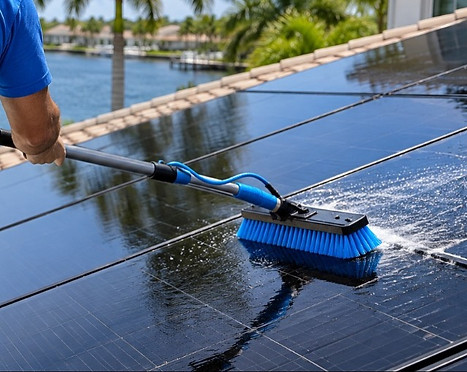
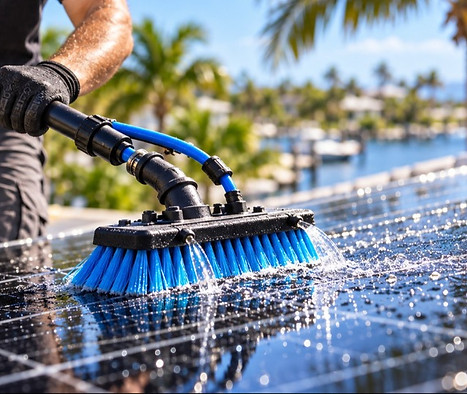
Our solar-focused team uses deionized water, soft-bristle solar brushes, non-abrasive cleaning methods, and a visual inspection process designed specifically for photovoltaic systems. The goal is not simply to make your panels look better. It is to safely remove performance-reducing buildup, document the condition of the array, and identify visible concerns that may require separate solar maintenance or repair.

Why Solar Panels Get Dirty on the Treasure Coast
The Treasure Coast combines strong sunshine with a humid, coastal environment. That is excellent for solar production, but it also exposes rooftop arrays to several types of contamination that normal rainfall may not completely remove.
Coastal Salt and Salt Fog
Homes and businesses near the Atlantic Ocean, barrier islands, the Indian River Lagoon, and other coastal waterways can receive repeated exposure to marine aerosols. Fine salt residue can settle on module glass and other exposed components, especially where onshore winds are common.
A light layer may be difficult to see from the ground, but repeated exposure can contribute to a film on the glass. Coastal properties should also be watched for visible corrosion around module frames, mounting hardware, and other exposed components.
Bird Droppings and Localized Soiling
Bird droppings create a different problem from a uniform layer of dust because they can cover a concentrated portion of a module. This creates nonuniform soiling, where some cells receive less light than the rest of the array.
Properties near waterways, trees, and common bird activity may experience these deposits more often. Because bird residue can become stubborn as it dries, it should be removed with a panel-safe method rather than aggressive scraping or high-pressure washing.
Hurricanes, Tropical Storms, and Windblown Debris
Treasure Coast solar systems also face hurricane-season conditions. Wind and rain can leave leaves, twigs, dirt, and other material around a solar array.
After a major storm, safety and system condition should be considered before treating the issue as a routine cleaning job. Surface debris may simply need removal, while cracked panels, loose components, wiring concerns, or abnormal system behavior may require a separate solar inspection or repair.
Pollen, Dust, and Organic Buildup
Pollen is a significant seasonal contaminant in Florida. Fine particles can combine with humidity and overnight dew, making them more difficult to rinse away than loose dust.
Research from the National Renewable Energy Laboratory has shown that rainfall does not always remove pollen-related soiling effectively in humid southeastern conditions. Tree sap, plant residue, mold, mildew, and other organic material can also accumulate depending on the property’s surroundings.
Irrigation Overspray and Mineral Spots
Sprinklers and irrigation systems can sometimes reach rooftop or ground-mounted solar panels. When mineral-containing water evaporates, it can leave visible spotting or residue on the glass.
Blue Energy Electric uses deionized water during its cleaning process. DI water contains far fewer dissolved minerals than ordinary tap or irrigation water, helping reduce mineral spotting as the panel surface dries.
Solar Panel Cleaning Across the Treasure Coast
Blue Energy Electric serves the three core Treasure Coast counties: Martin County, St. Lucie County, and Indian River County.
Martin County Solar Panel Cleaning
Blue Energy Electric provides solar panel cleaning in Martin County, including Stuart, Palm City, Jensen Beach, Hobe Sound, and surrounding communities.
Martin County properties can experience a combination of coastal salt, vegetation, seasonal pollen, bird activity, and storm debris. Homes closer to the coast or lagoon may see more marine residue, while tree-heavy inland properties may experience heavier pollen, sap, and organic buildup.
For detailed local information, visit our dedicated Martin County solar panel cleaning page.
Indian River County Solar Panel Cleaning
Blue Energy Electric also provides solar panel cleaning in Indian River County, including Vero Beach, Sebastian, Fellsmere, and surrounding areas.
Indian River County solar systems can be affected by coastal salt, lagoon-side humidity, vegetation, irrigation overspray, bird activity, pollen, and storm debris. The amount and type of buildup varies by property, which is why cleaning frequency should be based on actual conditions rather than a single schedule for every system.
Visit our dedicated Indian River County page for more local service details.
St. Lucie County Solar Panel Cleaning
Our St. Lucie County solar panel cleaning service covers Port St. Lucie, Fort Pierce, and surrounding communities.
St. Lucie County includes dense residential neighborhoods, landscaped communities, inland properties, and coastal areas near Hutchinson Island. These different environments can create different soiling patterns - from pollen and tree residue to salt, bird droppings, and windblown material.
For county-specific service information, visit our St. Lucie County solar panel cleaning page.

Our Solar Panel Cleaning Process
Every solar array and roof is different. Blue Energy Electric uses a process designed specifically for photovoltaic systems rather than treating solar panels like ordinary windows or roof surfaces.

1. Pre-Cleaning System and Site Check
Before cleaning begins, the crew evaluates the solar array and roof layout. This includes checking access, roof type, panel tilt, visible surface condition, and the safest way to complete the work.
If there is obvious damage or another condition that makes cleaning unsafe, that issue should be addressed before normal cleaning proceeds.
2. Deionized Water and Soft-Bristle Solar Brushes
Blue Energy Electric uses deionized water and soft-bristle solar brushes to loosen and remove common contaminants such as:
-
Salt residue
-
Pollen
-
Dust
-
Bird droppings
-
Tree sap and plant residue
-
Mold and organic buildup
-
Mineral residue
-
General surface grime
The process is designed to be non-abrasive and avoids relying on harsh detergents or pressure washing.
3. Careful Cleaning Around Module Edges
Debris and residue can collect along panel frames, lower edges, and nearby mounting areas. These areas are cleaned carefully while the crew watches for visible signs of physical damage, corrosion, or other conditions that may need further attention.
Cleaning and electrical repair are different services. If the team sees something that appears to require technical diagnosis or repair, it can be referred for appropriate solar maintenance.
4. Post-Clean Visual Inspection and Documentation
After the panels are cleaned, the array receives another visual check. A clean module surface can make some visible conditions easier to notice than when panels are covered with residue.
Blue Energy Electric’s current cleaning process includes before-and-after photos and a service report, helping the property owner see the completed work and any visible concerns noted during the visit.
5. Production Review When Monitoring Is Available
If system monitoring information is available, production data may provide useful context.
A production change should never be attributed to dirt alone without considering sunlight, weather, shading, equipment condition, and seasonal differences. Cleaning can recover production being lost specifically to soiling, but the amount varies from one system to another.

When Should Solar Panels Be Cleaned on the Treasure Coast?
There is no universal cleaning schedule that is correct for every solar system.
A waterfront home exposed to salt air, a house beneath mature trees, a property receiving regular sprinkler overspray, and a commercial array on a low-slope roof can all accumulate soiling at different rates.
It may be time to schedule a solar panel inspection or cleaning when you notice:
-
A visible haze or film on the modules
-
Salt residue on coastal properties
-
Heavy pollen accumulation
-
Bird droppings or sticky organic material
-
Mineral spots from irrigation or water exposure
-
Leaves or debris after a tropical storm
-
A sustained production decline that is not explained by weather or seasonal changes
-
A long period since the system was last inspected or cleaned
Properties with heavier coastal exposure, vegetation, bird activity, or irrigation may need attention more often than open properties with little surrounding contamination.
Rather than relying only on the calendar, the better approach is to combine visual condition, property environment, and system monitoring.
Does Rain Clean Solar Panels?
Rain can help rinse away some loose dust and surface material, but it should not be considered a complete solar panel cleaning method.
Pollen, bird droppings, tree residue, salt film, and mineral deposits can remain after rain. In humid conditions, some contaminants can also adhere more strongly to the module surface.
Research from the National Renewable Energy Laboratory found that rainfall did not completely remove pollen-related soiling in humid southeastern U.S. conditions. For Treasure Coast property owners, that means a rainy season does not automatically guarantee clean modules.
Why We Use Deionized Water
Ordinary tap and irrigation water contain dissolved minerals. When that water dries on glass, minerals can remain behind as spots or residue.
Deionized water has been processed to remove most dissolved ions. When paired with a soft-bristle solar brush, it allows panels to be cleaned without intentionally adding soaps or mineral-heavy rinse water to the surface.
For solar arrays already affected by irrigation spotting or visible mineral deposits, the exact treatment needed depends on the condition of the glass and the module manufacturer’s cleaning guidance.
Residential Solar Panel Cleaning
Cleaning rooftop solar panels yourself can involve more risk than many homeowners expect.
Solar systems are installed around energized electrical equipment, and roof surfaces may be steep, fragile, or slippery when wet. Tile roofs require particular care because improper foot placement can damage roofing materials.
Professional residential cleaning allows the work to be performed with the appropriate roof-access and solar-system considerations while also giving the array a visual condition check.
Blue Energy Electric serves residential solar systems throughout Martin, St. Lucie, and Indian River counties.


Commercial Solar Panel Cleaning
Commercial solar arrays can present different maintenance needs from residential systems. Larger panel counts, flat or low-slope roofs, facility access requirements, and operational schedules may all affect how and when cleaning should be performed.
For businesses, property managers, and facility owners, solar panel cleaning can be incorporated into a broader photovoltaic operations-and-maintenance plan.
Commercial cleaning may include scheduled or condition-based service, documentation, before-and-after photos, and recommendations when visible issues require further solar maintenance or repair.
Solar Cleaning vs. Solar Maintenance and Repair
A dirty solar panel and a malfunctioning solar system are not the same problem.
Cleaning addresses material on the module surface. It does not repair damaged wiring, failed inverters, cracked equipment, mounting problems, or electrical faults.
If your system is producing abnormally, showing monitoring alerts, or has visible physical damage, the correct next step may be solar maintenance and repair rather than cleaning alone.
Blue Energy Electric works with solar cleaning, maintenance, repair, installation, and related photovoltaic services, making it easier to distinguish between a surface-cleaning problem and a technical solar-system issue.
Why Choose Blue Energy Electric for Treasure Coast Solar Panel Cleaning?
Blue Energy Electric is a South Florida solar company that works directly with photovoltaic systems - not a general exterior-cleaning company that simply added solar panels to its service list.
For Treasure Coast customers, that means the cleaning service is backed by hands-on experience with solar installation, electrical systems, system maintenance, repair, battery storage, and rooftop solar equipment.
Our current solar cleaning process includes:
-
Deionized water
-
Soft-bristle solar brushes
-
Non-abrasive cleaning
-
No pressure washers
-
No harsh detergents
-
Pre-clean and post-clean visual checks
-
Before-and-after photo documentation
-
Service reporting
-
Recommendations when visible conditions may require solar maintenance or repair
Blue Energy Electric currently displays the following Florida license information on its website:
-
Solar License: CVC56991
-
Electrical License: EC13014796
-
Roofing License: CCC1337565
Our team serves homeowners and businesses throughout the Treasure Coast as well as Blue Energy Electric’s broader South Florida service area.

Get a Solar Panel Cleaning Estimate on the Treasure Coast
If your solar panels are covered with salt film, pollen, bird droppings, mineral spots, storm debris, or other visible buildup, Blue Energy Electric can evaluate the system and recommend the appropriate next step.
We provide solar panel cleaning throughout Martin County, St. Lucie County, and Indian River County.
You can also explore our broader South Florida solar panel cleaning service.
Frequently Asked Questions

What Your South Florida Neighbors Are Saying

Martin Loynd
Yay Blue Energy Electric to the rescue! We have had a terrible experience with the original installer of our solar panels and could not get them to return calls or provide service… Blue Energy immediately answered my call and knew exactly what was needed to fix the problem . Very professional and committed to Resolve issues. Gabi was most helpful and was able to answer all my concerns over the phone. The repair cost was reasonable. The work completed as promised.

V G
I was really pleased with the job that Blue Energy Electric did for me on my solar panel installation repair. I had a really bad experience with the company that originally installed it and was worried that I would not be able to have the work covered by warranty without going back to them. Dave from Blue Energy Electric came and took a look and sorted out everything and he managed to do so under that same warranty without an extra charge to me. He was professional, friendly and efficient but most importantly completely honest and trustworthy, something I was not used to in previous dealings with the solar company that installed my solar system. I cannot give this company a higher recommendation. Job well done thank you!!!