
Does Cleaning Solar Panels Improve Efficiency?

Updated: Sep 22, 2025

Cleaning your solar panels isn’t just about keeping them looking good—it’s essential for maintaining optimal system performance and maximizing energy savings. In South Florida’s environment, where salt air, pollen, dust, and debris accumulate quickly, dirty panels can reduce output and cost you money.
At Blue Energy Electric, we specialize in professional solar panel cleaning and maintenance designed to restore efficiency and protect your investment. Our licensed technicians serve homeowners and businesses across Palm Beach, St. Lucie, Indian River, Martin County, and surrounding areas with manufacturer-safe methods and eco-friendly practices.
In this article, we’ll show you the real impact of dirty panels using verified industry data, and explain when cleaning makes financial sense—along with how to do it safely or when to call a professional.
Key Takeaways (with Real Data)
Flat panels can lose up to 50% efficiency. At Google’s Mountain View campus, flat carport arrays that hadn’t been cleaned in 15 months doubled output after cleaning. A second cleaning 8 months later produced an instant 36% boost.
Even small daily losses add up. A California study of 186 PV systems found average soiling losses of 0.051% per day during dry periods. At 0.1% per day, that’s roughly 3% per month in energy loss. (Kimber et al., 2013)
Annual energy loss of 5% is common. According to the NREL Soiling Map, many U.S. regions experience an insolation-weighted soiling ratio (IWSR) of ~0.95, or 5% annual loss if panels aren’t cleaned.
In desert or dusty climates, losses can be far higher. Studies from Saudi Arabia report 2%–50% reductions, depending on dust storms and maintenance frequency. (MDPI study)
Rain helps—but only if it’s heavy enough. NREL’s modeling shows that daily rainfall of at least 2.5 mm can “reset” soiling, but anything less typically doesn’t remove stuck-on dirt or residues. (NREL Technical Report, 2023)
What Is Soiling and Why Does It Matter?
Soiling is the accumulation of airborne debris—dust, sand, pollen, bird droppings, salt spray, ash, or pollution—that settles on the surface of your solar panels. It blocks light from reaching the photovoltaic cells, reducing your system’s power output.
Tilted panels in rainy climates may self-clean during storms. But in dry, dusty areas—or on flat arrays where rain doesn't run off—soiling builds up faster and lingers longer, especially after pollen seasons, construction activity, or wildfire events.
According to the California PV Soiling Study, 26% of monitored systems lost more than 0.1% efficiency per day, a loss that compounds quickly during dry spells.
How Much Efficiency Can Cleaning Recover?
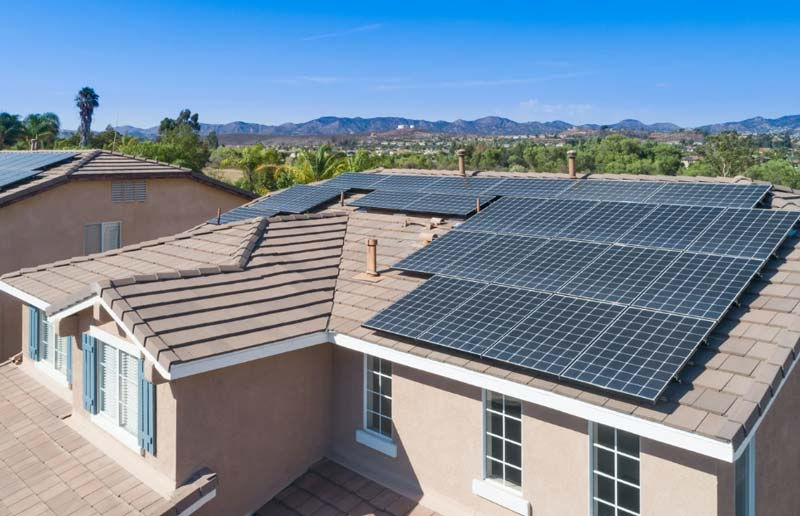
The amount of power you can recover by cleaning depends heavily on tilt angle, rain frequency, and your local environment.
Condition | Estimated Energy Recovery |
Tilted residential array with light dust | 1–5% |
Dry climates with visible buildup | 5–15% |
Flat panels or after major dust events | 20–50%+ |
Examples:
Google’s carport system showed 2× output after its first wash in 15 months.
SolarQuotes reports typical post-cleaning boosts of 1–5% in mild Australian climates.
ResearchGate data shows several percent per month of soiling loss in California during dry seasons.
When Is Rain Enough—and When Is It Not?
Rain can help reduce surface dust but isn’t always enough to restore peak efficiency.
What the data shows:
Rainfall under 2.5 mm/day is usually insufficient to fully remove soiling.
Sticky materials like sap, bird droppings, or pollen need manual removal.
Light drizzle often forms mud films that reduce light transmission even further.
According to the NREL technical documentation, a threshold of 2.5 mm/day is typically needed to “reset” panels to clean-state conditions. Less than that? You should clean them manually or hire a pro.
Cost–Benefit Analysis: When Does Cleaning Pay Off?
Cleaning should be treated as a cost-benefit decision, based on how much energy you’re losing vs. the cost of cleaning.
Simple method to estimate:
Calculate likely loss If you’re losing 5% during a dry season, and your system produces 30 kWh/day, that’s a 1.5 kWh daily loss.
Multiply by energy value If you pay $0.20/kWh, that’s $0.30 lost per day, or ~$9/month.
Compare to cleaning cost If a professional cleaning costs $150 and recovers $9/month, it pays off in about 17 months—faster if your soiling rate is higher.
When cleaning pays quickly:
Flat commercial panels with no rain drainage
Homes near dirt roads, construction, or open fields
Long dry seasons with minimal rainfall
Pollen-heavy or wildfire-prone regions
Use this rule of thumb: If you haven’t had a heavy rain (≥2.5 mm/day) in 4+ weeks, and output is down, cleaning is likely worth it.
Safe and Effective Solar Panel Cleaning: Best Practices

Not all cleaning methods are safe. Scratches, mineral deposits, or thermal shocks can reduce efficiency permanently. Here's how to clean the right way.
Do:
Rinse panels early in the morning (when they’re cool).
Use soft brushes and deionized or distilled water.
Let panels air dry (no towels).
Wear safety harnesses if cleaning on the roof.
Don’t:
Use high-pressure washers.
Scrub with abrasive pads or sponges.
Use tap water with high mineral content (leaves spots).
Clean when panels are hot or in direct sun.
If deposits are stuck (sap, droppings, ash), soak before wiping. Use pH-neutral soap if needed—never ammonia-based cleaners.
How Often Should You Clean Solar Panels?

There’s no universal schedule—it depends on your climate, panel tilt, and recent weather. Use performance monitoring to identify trends.
Environment Type | Suggested Cleaning Frequency |
Rainy, tilted, residential roof | Every 6–12 months |
Dry or dusty climate | Every 1–3 months |
Near trees, birds, or pollen zones | Every 3–4 months |
Flat commercial arrays | Monthly to quarterly |
After wildfire, ashfall, or storm dust | Immediately after event |
In California’s dry months, soiling exceeds 0.1% per day in many locations, meaning monthly cleaning can prevent 3–5% energy loss. (ResearchGate source)
Frequently Asked Questions
Is cleaning always worth it?
Not always. If you live in a rainy climate and your panels are tilted, gains may be minimal. Use output monitoring to guide your decision. (OSTI data)
How do I know it’s time to clean?
Check for visible film, droppings, or production drops after a dry spell. Also monitor your inverter for changes in daily output on sunny days.
Can I rely on wind or rain alone?
Only in certain cases. Light rain doesn’t remove sticky buildup. Dust and ash often need manual intervention. (NREL report)
What’s the best time of day to clean?
Early morning or late afternoon, when the panels are cool. Cleaning hot panels can lead to thermal cracking or streaking.
Need Help Cleaning Your Panels in Florida?
If you live in South Florida, Blue Energy Electric offers:
Maintenance and inspection services to catch issues early
Annual care plans to keep your system running at peak performance
Licensed, insured professionals familiar with Florida’s climate, pollen, salt air, and storm exposure


Comments